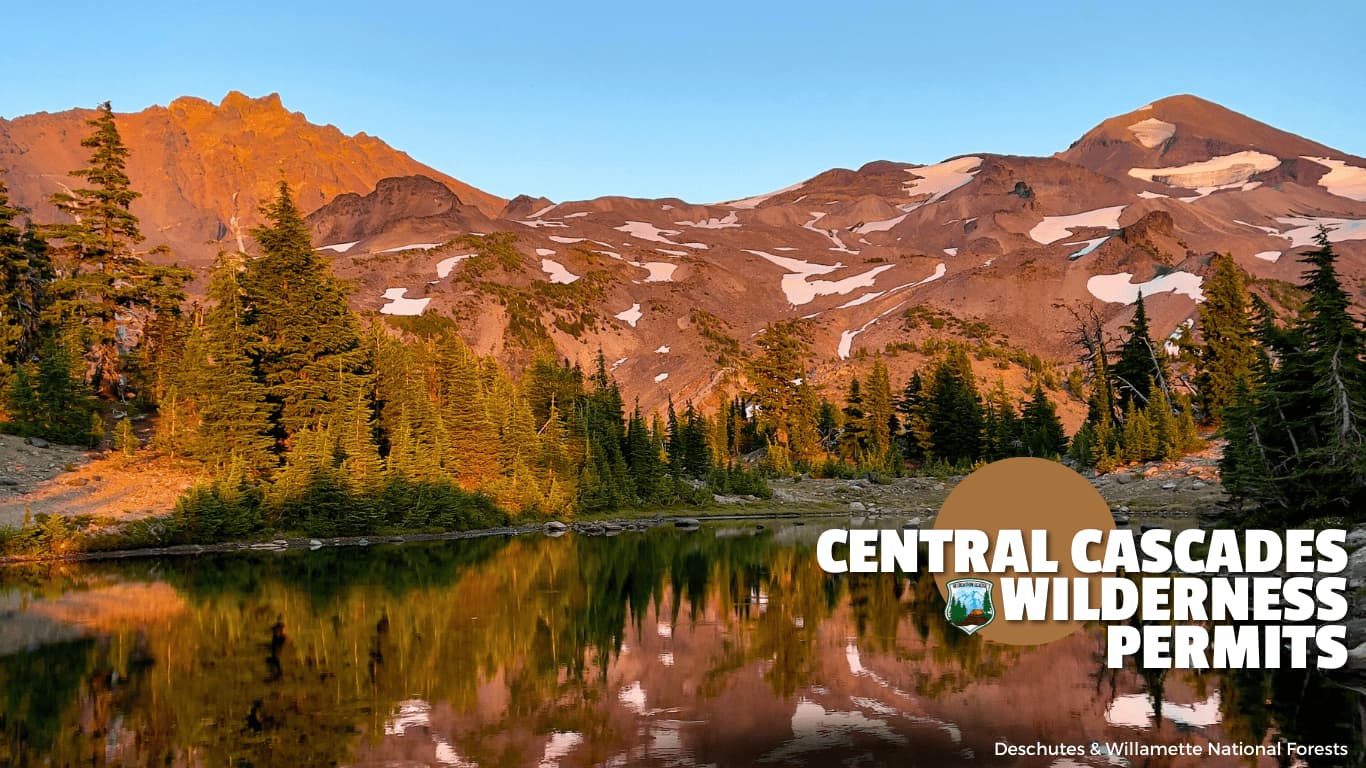
The Central Cascades Wilderness areas of Oregon are home to iconic mountain peaks, high alpine meadows and lakes, and old growth forests. This guide covers everything you need to know about the permit system.
Overview
The Central Cascades Wilderness areas of Oregon are home to iconic mountain peaks, high alpine meadows and lakes, and old growth forests. These stunning landscapes feature crystal clear streams, wildflower meadows, rugged mountain views, and young lava flows in the Mount Jefferson, Mount Washington, and Three Sisters Wilderness areas. Easily accessed by population centers in central and western Oregon, while drawing visitors from around the world, the Central Cascades Wilderness Permit system was established to ensure the protection of these landscapes now and into the future, in accordance with the Wilderness Act of 1964. The system was implemented to control visitor numbers and protect sensitive habitats by limiting numbers on popular trails and encouraging the use of lesser-known trails. Since the process started in 2021, the Deschutes National Forest reports reduced crowding on trails and better distribution of trail users, with signs of wildlife returning and significantly less trash and human waste for rangers to manage.
- Dates: Permits are required from June 15 to October 15 every year
- Overnight Trips: Required for all overnight stays in the Mt. Jefferson, Mt. Washington, and Three Sisters Wilderness areas
- Day-Use Trips: Required at 19 out of 79 trailheads in these Wilderness areas; all other trailheads have a free self-issued permit at trailhead
- Permits are managed through Recreation.gov — search for "Central Cascades Wilderness"
Permit Types and Fees
There are two types of permits available. Overnight permits allow the permit holder and their group to travel in these wilderness areas for overnight trips. Day-use permits are valid for entry per person and are non-transferable, with the group leader required to be present at all times. Overnight permits are not valid for day use, and day use permits are not needed in addition to an overnight permit.
- Day-Use Permits: $1 per person per outing (non-refundable processing fee). Reservations open 10 days and 2 days before your trip.
- Overnight Permits: $6 per group (1 to 12 people, non-refundable processing fee). 40% released in advance starting April 1, 2025; remaining 60% released 7 days before trip start.
- Cancellation Policy: If you can't use your permit, cancel it to make it available for others. Processing fees are only refunded if the Forest Service closes an area.
- Quota Limits: Each individual can only hold three active overnight permits at a time.
Related product
Ranger Tati + Recreation AI
Use source-backed answers when you need to turn route questions, permit confusion, or changing conditions into a clearer next step.
Explore Recreation AIRelated product
Pathfinder
Move from inspiration to logistics with a trip planning toolkit built for gear, timing, permits, fallback plans, and repeat use.
See PathfinderHow to Reserve Permits
All reservations must be made through Recreation.gov either online, via the Recreation.gov app, or by calling their call center at 1-877-444-6777 or TDD 877-833-6777. Permits are not available at Forest Service offices. When searching on Recreation.gov, visitors should search for "Central Cascades Wilderness" and follow the prompts. For overnight permits, users will need to create an account with Recreation.gov. An account is not required for day use permits, but it is recommended. The permit holder must have a digital or paper copy of the permit with them during their visit.
Booking Windows and Availability
For overnight permits, about 40% of each day's permits will be released on the first Tuesday in April at 7:00 a.m. PDT (April 1, 2025, for the 2025 season). The remaining overnight permits become available seven days before a trip start date. For example, for a trip starting on a Saturday, that permit could be reserved starting on the Saturday prior.
Day-use permits will be released in two rolling windows: 10 days and then 2 days before the trip date. For the first day of permit season, June 15, the first batch of permits will be released on June 5 at 7:00 am PDT, and the remaining permits will be released June 13 at 7:00 am PDT. The 10- and two-day rolling windows were implemented to reduce the number of no-shows and increase the opportunity for people to get day-use permits.
Permit Quotas and Limitations
Individuals are allowed to hold three overnight permits at a time. Once a permit has expired, a hiker can make another overnight reservation. This limit is designed to prevent hoarding of permits.
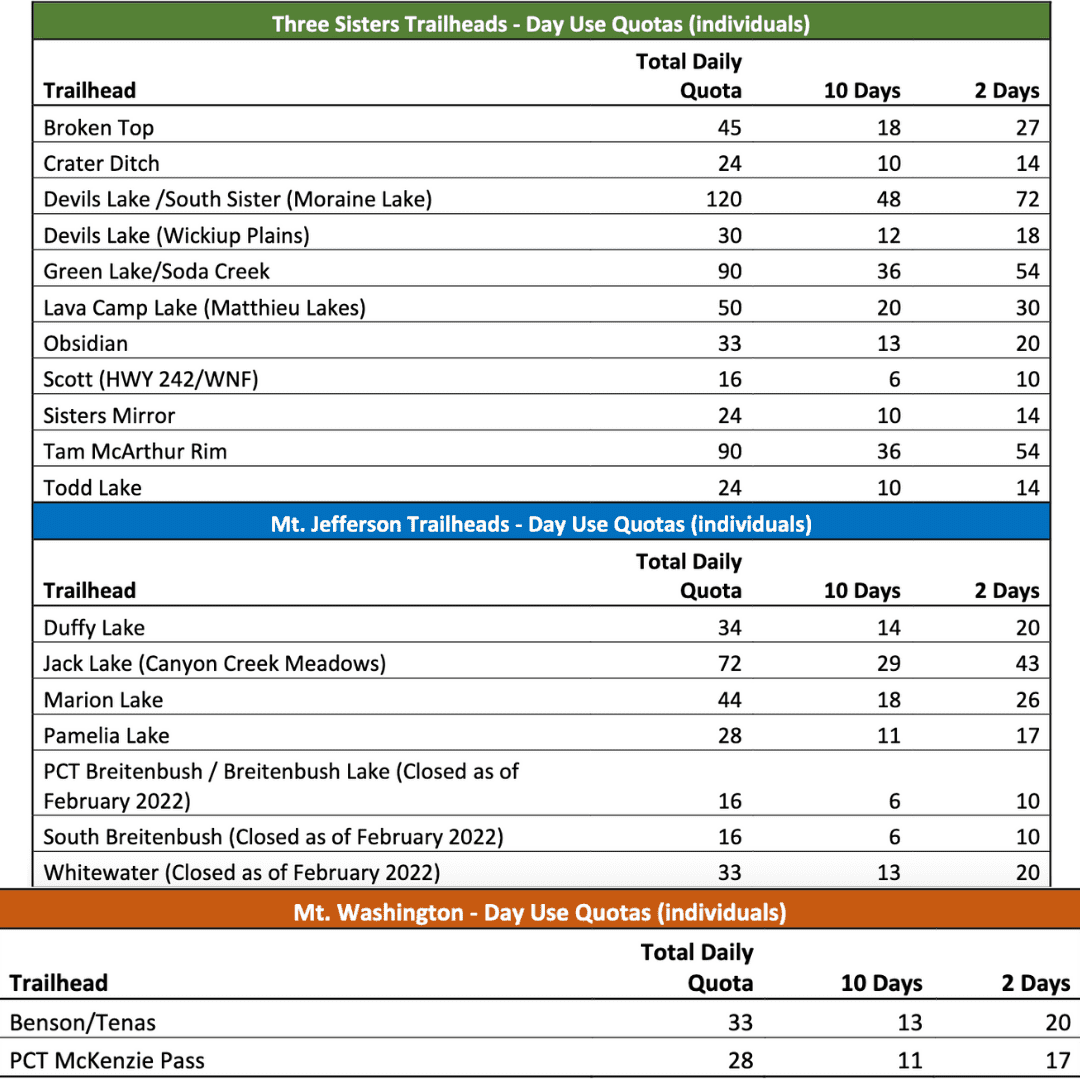
Day-use permits are issued on a per-person basis, so the Broken Top Trail, with 45 day-use permits available on any given day, is limited to exactly 45 hikers per day. Different trails have different capacities; for example, 16 day-use permits will be available each day for the Scott Trail, while the South Sister Climber Trail will be capped at 120 hikers per day. For overnight permits, one to seven permits will be available for all of the 79 impacted trails on any given day, with each permit covering a group of up to 12 hikers and backpackers.
Permit Rules and Regulations
Central Cascades Wilderness Permit regulations include several important rules. Permits are non-transferable. Group leaders cannot be changed, and at least one group leader or alternate group leader must be with the group. You must enter the permit area on the entry date and entry trailhead shown on your permit. All group members are required to start on the same day and camp together. The maximum length of overnight stay is 14 consecutive days. You must carry your permit with you and present it upon request to any Forest Officer. You may not re-enter on a different date using the same permit. Travel between Central Cascades Wilderness areas is only allowed at Pacific Crest Trail trailheads.
Additional Restrictions and Guidelines
Campfires are not allowed above 5,700' elevation and at additional lower elevation destinations. Visitors must practice "Leave No Trace" skills, including properly disposing of human and pet waste and carrying out all trash. Some trailheads may not be accessible to vehicles until mid/late-June, including trailheads accessed from McKenzie Highway (Oregon 242) and the Cascade Lakes Highway. Broken Top and Crater Ditch trailheads may not be accessible by vehicle until late July/early August, as access depends on Forest Service Roads 4600-370/80, which require 4WD and high clearance. A Northwest Forest Pass or daily recreation pass may still be required at trailheads where such fees apply, as the Central Cascades Wilderness permit doesn't cover those parking fees.
Exceptions to Permit Requirements
Pacific Crest Trail (PCT) Long Distance permit holders, issued by the Pacific Crest Trail Association for long-distance hikers and riders traveling more than 500 miles along the PCT, are exempt. However, camping is restricted to the PCT Corridor and prohibited in certain high-use areas.
Hunters with mountain goat, elk, or deer hunting tags from ODFW can use their tags in lieu of Wilderness permits during the hunting season established by ODFW. Entry is allowed one day prior to the start of the hunting season and one day after. Three additional support persons can accompany the licensed hunter, with a group size maximum of four per hunting tag.
Volunteers working in coordination with the Forest Service are also exempt from permit requirements.
Tips for Securing Your Permit
Set a reminder for the permit release dates, as popular trailheads fill up quickly. Consider exploring lesser-known trailheads for a more tranquil experience. Have backup plans in case your desired trailhead is full by looking into nearby options or adjusting your trip dates.
If you're looking for a way to explore the Wilderness without dealing with permits, consider trails that don't require one, as only 19 of the 79 trailheads in the Central Cascades Wilderness areas require a day-use permit. Another option is to volunteer with organizations like Friends of the Central Cascades Wilderness (FCCW), which can grant you access to limited-access trails without going through Recreation.gov. This volunteer pass may grant you and one guest access to all limited-access trails for both day-use and overnight trips during the following season.
Why the Permit System Matters
The Central Cascades Wilderness Permit system was established after hiking trails in the Mount Jefferson, Mount Washington, and Three Sisters wilderness areas were bursting at the seams a decade ago, following a period when use grew dramatically. More people in the region meant more day-trippers and hikers in the Cascades, leading to trail widening and increased trash in otherwise pristine areas.
The permit area requires additional protection to preserve the natural beauty and wilderness experience for you and future visitors and to better manage recreation-related impacts. Use limits, or quotas, are based on trailhead entry points. Current and future users will all benefit from use that is managed to preserve and protect wilderness character for the long term. The permit system has also led to signs of wildlife returning to some areas.
Contact Information
If you have questions about the Central Cascade Wilderness Permit system, please contact a Willamette or Deschutes National Forest office. You can also get assistance by calling the Recreation.gov call center at 1-877-444-6777 or TDD 877-833-6777.
- Deschutes National Forest: 63095 Deschutes Market Road, Bend, OR 97701
- Willamette National Forest: 3106 Pierce Parkway Suite D, Springfield, OR 97477
Related ethos
RESPECT Through Recreation
The values framework behind how Recreation Leader approaches stewardship, curiosity, belonging, and responsible outdoor use.
Read the RESPECT ethosRelated ethos
Vibe Outside
Waitlist for local outdoor community, trip coordination, and finding the right people to go with.
Learn about Vibe Outside