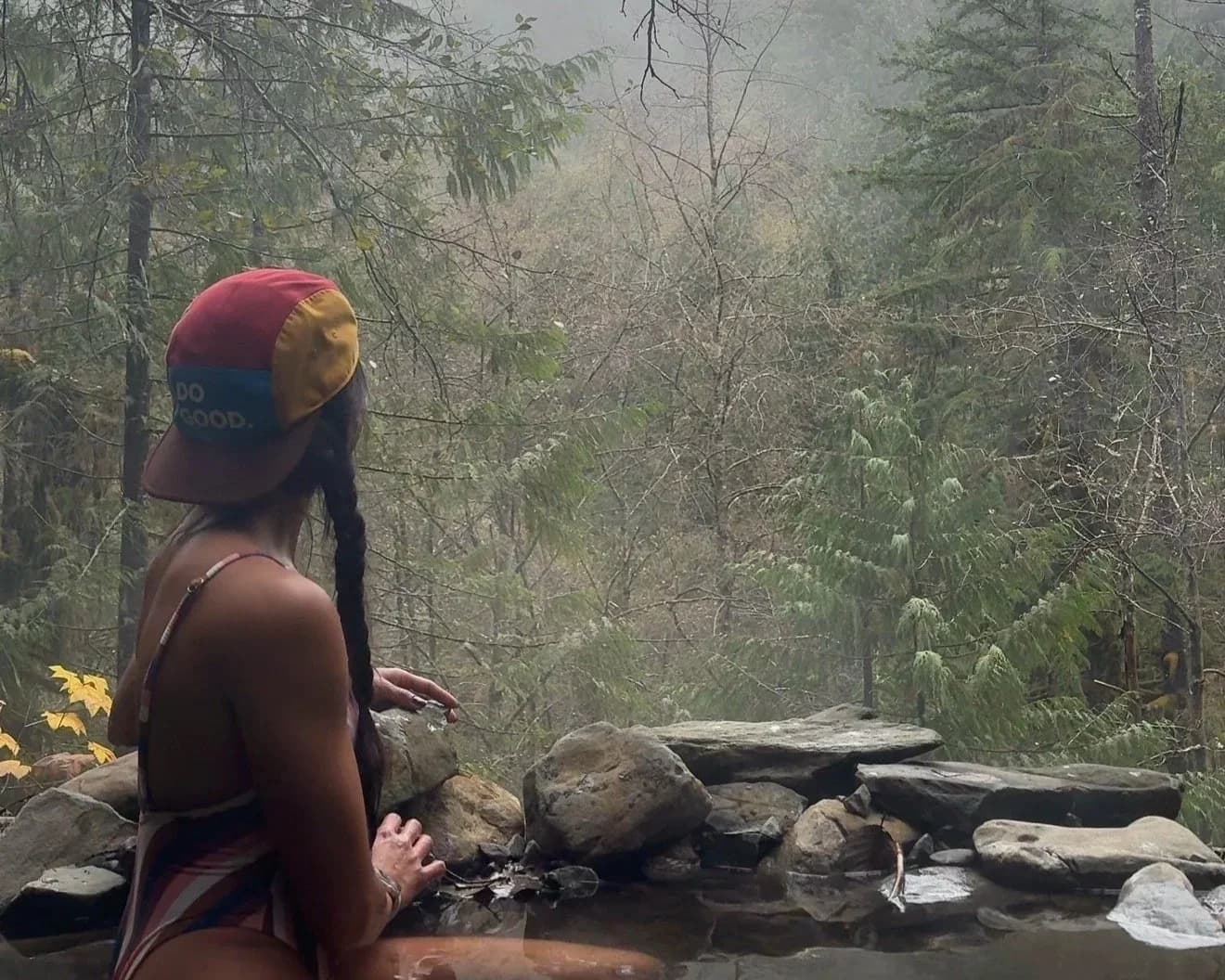
Discover how to visit Olympic Hot Springs in Olympic National Park, featuring 7-10 natural hot spring pools, the secret sauna cave, and everything you need to plan your visit.
Overview
Where rainforest meets geothermal wonder, Olympic Hot Springs offers one of the Pacific Northwest's most rewarding wilderness soaking experiences; now with a mandatory 18-mile bike ride.
Olympic Hot Springs holds legendary status among Pacific Northwest hot spring enthusiasts. Nestled deep in the temperate rainforest of Olympic National Park, these natural pools offer an unusual combination: a pristine wilderness setting, multiple pools at varying temperatures, an old-growth forest canopy overhead, and the satisfaction of earning your soak through effort.
The former access road washed out years ago. Reaching the springs now requires a 9-mile bike ride (18 miles round trip) or an even longer hike. This is an adventure for sure!
- Location: Olympic National Park, Elwha River Valley, Washington
- Closest town: Port Angeles, Washington (20 miles north)
- Bike ride required: 9 miles one-way on washed-out Boulder Creek Road (18 miles round trip)
- Hike: additional 2.2 mile hike once at the trailhead (one-way)
- Cost: America the Beautiful Pass required for parking at the trailhead
- Bike rentals: Elwha Bike Adventures (elwhaebikeadventures.com)
Renting E-Bikes: Elwha Bike Adventures
Elwha Bike Adventures is located near the Elwha Valley entrance. Includes mountain bike, helmet, and basic repair kit. Reservations are recommended, especially in summer.
Reserve several days ahead during peak season for best availability.
We found out about the secret sauna cave through the owners of this business, they actually give you a map to find it.
Related product
Ranger Tati + Recreation AI
Use source-backed answers when you need to turn route questions, permit confusion, or changing conditions into a clearer next step.
Explore Recreation AIRelated product
Pathfinder
Move from inspiration to logistics with a trip planning toolkit built for gear, timing, permits, fallback plans, and repeat use.
See PathfinderWhat to Expect on the Bike Ride
Difficulty: Moderate. Not technical single-track, but not smooth gravel either.
- Terrain: Loose gravel and rocks, multiple washouts, tree roots and debris, sustained uphill sections, dense rainforest scenery
- Miles 0-5: Smoother old-road surface, gradual uphill
- Miles 5-7: Rougher terrain, intermittent washouts
- Miles 7-9: Steeper, rockier, slower going
- Mile 9: Reach former trailhead; lock bikes; begin 2.5-mile hike
The Final Approach: 2.5-Mile Hike to the Springs
At the former Boulder Creek Trailhead, lock your bike and begin the hike. You'll know you're close when you smell sulfur and see steam drifting through the trees.
- Well-maintained trail
- Moderate grade
- Footbridges crossing Boulder Creek
- Old-growth forest
- 45-60 minutes travel time
The Springs: What Awaits You
After 18 miles of biking and 5 miles of hiking, you reach a classic Pacific Northwest geothermal site.
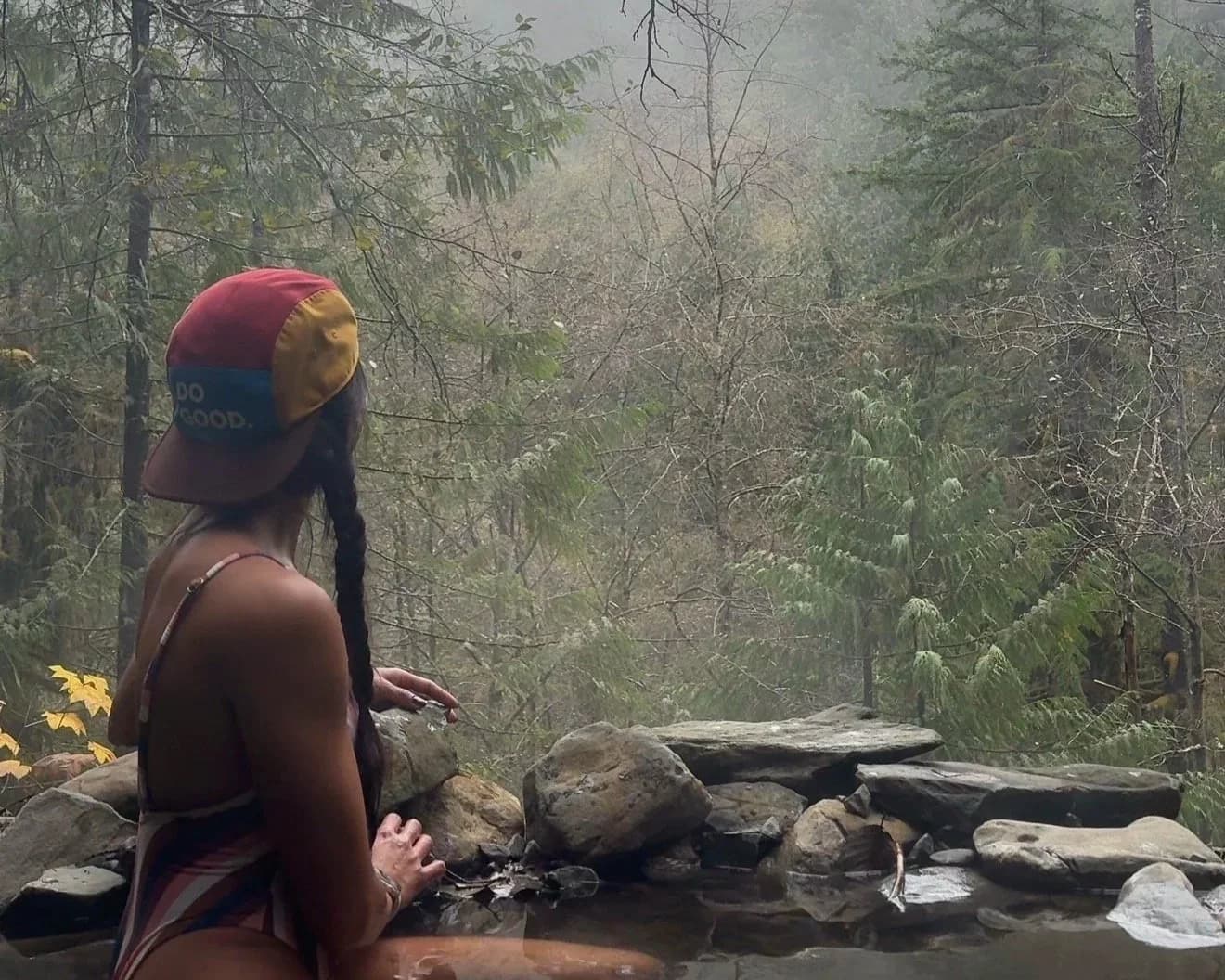
Olympic Hot Springs has 7-10 natural pools depending on season and flooding. I would highly recommend traveling past the first pools, there are secret hidden ones that are seriously awesome.
Natural rock pools surrounded by old-growth hemlock, Douglas fir, and cedar. Steam rising through the canopy. Boulder Creek flowing nearby.
Clothing-optional with a long tradition. Visitors are typically quiet, relaxed, and respectful.
- Upper pools (hottest): 100-105°F, small and intimate, often busiest
- Middle pools ("Goldilocks zone"): 95-100°F, room for 4-8 people, most popular for long soaks
- Lower pools: 90-95°F, good for hot days, less crowded, sometimes mixed with cold creek water
Directions from Port Angeles
Total drive time: 30-40 minutes. Parking is limited; arrive early during summer.
- Take Highway 101 west for ~8 miles
- Turn left onto Olympic Hot Springs Road
- Enter Olympic National Park (pay entrance fee)
- Continue ~10 miles to Boulder Creek Road
- Drive to the locked gate
- Park, unload, and begin biking
Costs and Permits
- Entrance fee: America the Beautiful Pass for parking
- Hot springs: Free
- Overnight camping: Backcountry permit required
What to Pack
- Mountain bike (or rental), helmet, bike lock, repair kit
- 2-3 liters of water and snacks or lunch
- Towel, water shoes or sandals, bathing suit (optional), dry bag, headlamp
- Moisture-wicking base layer, insulating layer, rain jacket, extra socks
- 3-4 liters of water, substantial food, first-aid supplies, sunscreen, bug spray
- Small trash bag, toilet paper + trowel
- Leave behind: glass containers, soap or shampoo, alcohol, dogs, speakers
Overnight Option: Backcountry Camping
A permit is required. Camping location is near Boulder Creek, about 0.5 miles from the springs. Bear canister required. Campfires are not allowed.
- Advantages: Dawn soaking, star soaking, split the bike ride over two days
- Considerations: Heavier pack, bear safety, weather variability
Geology and Natural History
Water is heated underground by localized geothermal gradients (the Olympics are not volcanic). The water emerges around 138°F at the source and cools as it flows into pools.
The Elwha Valley receives 140+ inches of rainfall annually, supporting lush temperate rainforest ecosystems.
- Wildlife: Black bears, Roosevelt elk, black-tailed deer, mountain lions (rare), various bird species
Seasonal Considerations
Summer (June-September): Warm, long days, low creek levels. Cons: Crowded, bugs, hot upper pools.
Fall (October-November): Fewer crowds, cool air. Cons: Rain, mud, short days.
Winter (December-March): Quiet, dramatic scenery. Cons: Snow, difficult access, hypothermia risk.
Spring (April-May): Wildflowers, fewer crowds. Cons: High creek levels, muddy trail, unstable weather.
Is Olympic Hot Springs Worth the Effort?
The route requires significant commitment — 18 miles of biking, 5 miles of hiking, gear, and time.
If you want a remote, undeveloped, high-effort wilderness soak, this location delivers.
If you want an easy soak, go to Sol Duc Hot Springs.
Related ethos
RESPECT Through Recreation
The values framework behind how Recreation Leader approaches stewardship, curiosity, belonging, and responsible outdoor use.
Read the RESPECT ethosRelated ethos
Vibe Outside
Waitlist for local outdoor community, trip coordination, and finding the right people to go with.
Learn about Vibe Outside